
|
The
Book Of Ruth |
Chapter
2:1-3
"Ruth's Reception"
J. Deering, AncientPath.net
Download Study -
BACK TO RUTH - GROUP STUDIES
HOMEPAGE -
BACK TO AncientPath
HOMEPAGE
LAST WEEK:
We introduced the major characters of the Book of Ruth
and their journey from Israel to Moab. Here’s our outline and text for what we
covered.
Ruth's Reception 1:19-22
A.
Sojourn: 1:19a
So they both went until they came to Bethlehem.
B.
Surprise: 1:19b And it came about when
they had come to Bethlehem, that all the city was stirred because of them, and
the women said, "Is this Naomi?"
C.
Sorrow: 1:20a And she said to them, "Do
not call me Naomi; call me Mara,
D.
Situation: 1:20b for the Almighty has
dealt very bitterly with me.
E.
Sorry: 1:21-22 "I went out full, but the
LORD has brought me back empty. Why do you call me Naomi, since the LORD has
witnessed against me and the Almighty has afflicted me?" 22 So Naomi returned,
and with her Ruth the Moabitess, her daughter-in-law, who returned from the land
of Moab. And they came to Bethlehem at the beginning of barley harvest.
Parallel 1
– The nation of Israel returns to God from idolatry. The nation is standing at
the threshold of grace, in the time between repentance and receiving the joys
and fulfillment of being totally back in fellowship.
Parallel 2
– When the believer returns, following God’s discipline, to fellowship through
confession there can be bitterness. Some believers only get this far – they end
their outward waywardness but are still bitter with God because what they wanted
did not fit into God's plan for them.
In
Chapter 2
Ruth will be introduced to her Kinsman-Redeemer and Naomi will work hard at making sure that Ruth
does all the right things in meeting him.
LESSON 5 - RUTH'S REAPING
LESSON 05
The Book of Ruth – CH-2:1-3
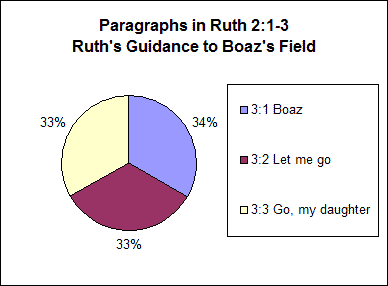
"Guidance To Boaz's Field"
Now we will be moving from Chapter 1 and entering
Chapter 2 and the first three verses.
We’ve mentioned the importance of the fact that the
pattern of the book reflects the pattern of Israel’s (via the Tribe of Judah)
relationship with The LORD God. We’ve also learned that the story was not made
up to do that but was chosen by its author because is so closely followed what
God did with the nation of Israel during the times of the Judges. It shows the
LORD God as the one who so loves His people that He always attempts to lead them
to repentance and restoration in their relationship to Him. This pattern can be
demonstrated through all ages with His relationship to His people – including us
today.
Chapter 2
introduces us to the central theme of the book, which is Redemption through a
Kinsman-Redeemer.
Here in this study, we will be introduced to the Kinsman-Redeemer concept as it
applies to Naomi, and learn why she disqualifies herself and passes the
opportunity down to her daughter-in-law Ruth. The writer gives away the plan,
but it seems both Naomi and Ruth are pretty much unaware of the events that will
pull the story of redemption through the Kinsman-Redeemer together.
THE VISUALIZED TEXT
(NASB)
1.
Boaz – 2:1
Now
Naomi
had
a relative
on
her husband’s side,
a
man of standing
from
the clan of Elimelech,
whose
name was Boaz.
The word now
introduces a change in direction. The book so far has been about waywardness,
chastisement, and then repentance. Now we move along to that time when, after
they have been disciplined, we are introduced to a deeper relationship with God.
Naomi has returned to Bethlehem after the deaths of her
husband, Elimelech, and her two married sons. She has returned alone with Ruth,
the Moabite wife of her late older son Mahlon.
Naomi still has a relationship with her husband’s family
and is mindful of the rite of Levirate
marriage. We already know that she does not see herself as qualifying for
the rite, because of her advanced age, but she sees that Ruth does.
Ruth, if she could be married and have children, would
be able to continue not only Mahlon's family line but Elimelech's as well. The
story introduces us to Boaz, a man who is wealthy and unmarried and a close
relative of Elimelech's.
About the faithfulness of Boaz
1.
Faithful - In spite of war and famine – still master of considerable wealth
2.
Faithful – stayed in Bethlehem, Judah
3.
Faithful – member of Elimelech’s family
4.
Faithful – to Israel
5.
Faithful – to God
Ruth 2:2, “Let Me Go”
And
Ruth
the
Moabitess
said to
Naomi,
"Please let me go to the field and glean among the ears of grain after one in
whose sight I may find favor."
And she
said to her,
"Go, my daughter."
Brief Commentary on Ruth 2:2
This paragraph begins with the word “And.” So it is a
continuation of thought with verse 1. Naomi has a male relative who is of
standing and a physical descendant of the line of her late husband Elimelech.
Earlier, we’ve talked about the Levirate Marriage law and the importance of a
kinsman-redeemer, but it hasn’t been mentioned in the text yet. This is the
first “hint” of what’s ahead.
Ruth is referred to as “the Moabitess.” This is
important on a couple of levels. First, we are to recognize that this story,
about God’s redemptive plans, includes Gentiles – even at this most important
level in the genealogy of King David, and the Son of God, Jesus. Second, here we
have this “stranger”, a woman, who is going to attempt to support herself and
her elderly mother-in-law by gathering left-over grain out in fields that other
people own. This woman is from the very culture that brought God’s discipline
upon Israel (famine), and it is here that Ruth is attempting to find acceptance
and provision.
It is harvest time and Ruth is aware of the Jewish law
called "The Right of the Poor." God considers that the crops are a gift from Him
to all His children, the Jew first, and then the stranger (Gentile). He also
considers that the owners of land are merely stewards of that land and the
harvests from the land. God even put in place laws about the return of land that
was sold (usually because of poverty) to another… reverted back to the original
owners once every fifty years. This time was called the year of Jubilee.
Ruth says "Please let me go…." Her heart is still full
of love and service for Naomi. She knows that Naomi is older and work in the
fields would be a great burden for her, so she wants to go in her stead. Without
a rightful place in the community (a married place) they need the food that can
be legally gleaned from the fields in order to keep themselves fed.
Ruth also seems to know the dangers of the fields. Even
back then a lone woman was at risk, especially among those (men) who were out in
the fields work or gleaning for a free meal.
There is a small but interesting wordplay here in that
the word for reapers, later in the text, literally means "those who follow along
behind," and Ruth is asking to "follow along behind” one in whose sight she may
find favor." Finding favor will at least offer her protection while she is in
the field. This one, or ones, could be male or female. She is also hoping that
the owner of said field will find her presence acceptable. Not every farmer
idealized “The Right of the Poor” law for re-gleaning their fields for free.
Naomi gratefully says "Go, my daughter," for she no
longer refers to Ruth as "my daughter-in-law," but now Ruth has become "my
daughter." Naomi and Ruth have become much closer through their time of trials
and travels.
Returning to the Lord in repentance is often a difficult
task whether it be a nation or an individual. We are glimpsing into that period
of time when the one bringing repentance is introduced to The Lord God in a new
way. After chastisement we expect more chastisement when we come face to face
with God, but like the father in the Prodigal Son story, God is waiting
patiently and gracefully for our willing
return, ready to heap treasurers upon us for returning.
Ruth 2:3 – “Go, My Daughter”
So
she
departed and
went and
gleaned in
the field
after the reapers; and
she happened to come to the portion of the field belonging to Boaz,
who was of the family of Elimelech.
Brief Commentary on Ruth 2:3
Ruth goes and does. That is an enormous statement of
obedience. A foreign, unmarried, woman travels to the workplace where there are
Hebrew men and women who have worked with each other for years and humbles
herself to "glean" after the workers.
Then she "happens" to work in the field of Boaz. There is nothing in the text
that indicates that she might have searched and found his field. It merely
states that she “happened” to wind up gleaning there. Our God does not believe
in happenstance. If you seek Him, He will find you – He will make your ways
straight to Him. Ruth goes seeking fulfillment for her and Naomi, and in the
process God will provide Himself a redeemer and the field of Boaz finds her.
Are you repentant
as a believer having turned from sin – have you sought after Him? If you have,
He knows where you are and He will come to you and welcome you with open arms.
The Book of Ruth
Bible Study materials on this website are a ministry of AncientPath.net and are
made available here free and may be copied for use in Bible study groups, in
limited numbers, providing that no charge is made for them. Items that appear as
copyrighted materials that are not of our authorship are not to be copied
without the express permission of the original copyright holders. Every effort
has been made to give proper footnote credit for items that are quoted.
No further distribution or use of
these materials is allowable under U.S. or International Copyright Law without
the express permission of AncientPath.net. ©2008
AncientPath.net,
All rights reserved.
J. Deering [AncientPath.net]
is the author and editor of this study.
AncientPath.net © 2024
Jeremiah 18:15
"Don't stumble from the
Ancient Path.”
2024-05-01 Original Class Date